For DTC Brands � 300 Piece MOQ
Shopify Clothing Manufacturer � Custom Garments for DTC Stores from 300 Pieces Per Style
SDF Clothing manufactures custom garments for Shopify stores with the specific needs of DTC brands in mind. We understand that Shopify businesses live and die by customer reviews, sell-out situations, and margin pressure. That's why we offer 300 piece minimums, consistent quality across batches, and 4-6 week reorder speeds. Trusted by 300+ Shopify brands in USA, UK, Australia, and Canada since 1998.
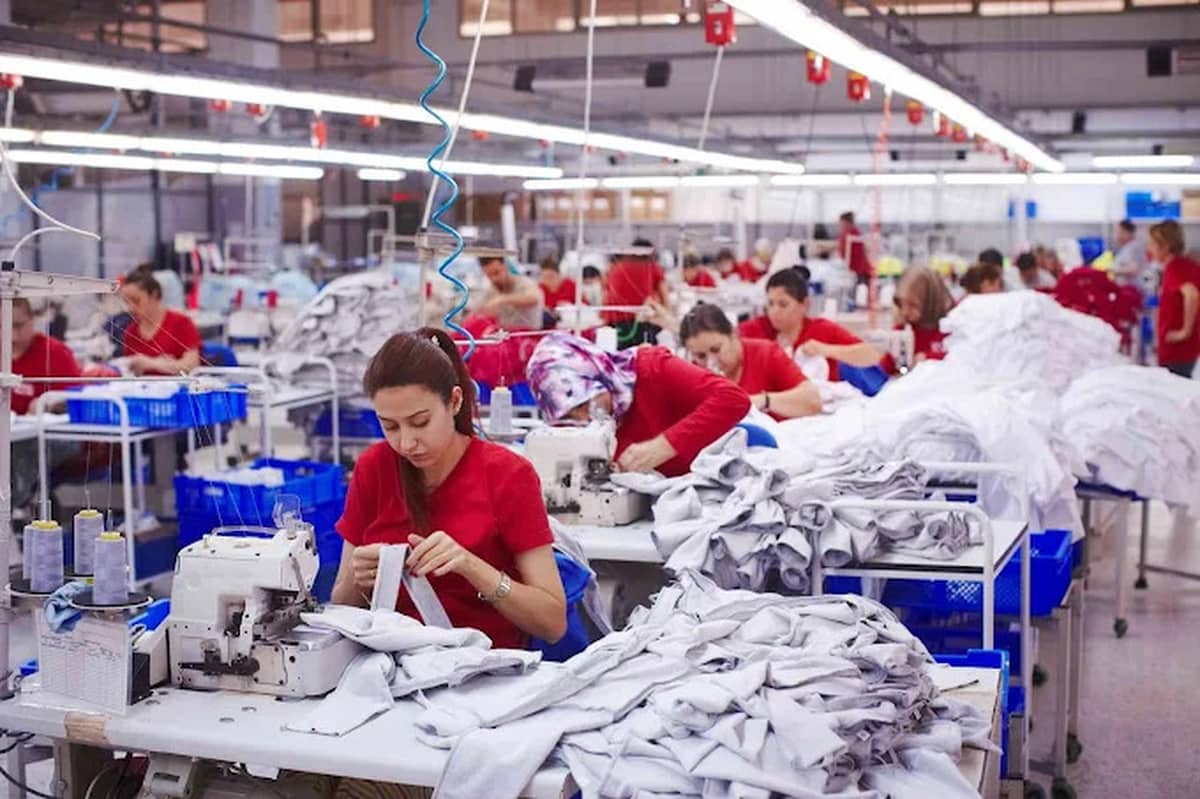
What Shopify Clothing Brands Need From a Manufacturer
Shopify clothing brands operate differently from traditional retail. Your customers leave public reviews that can make or break your brand. One bad batch of products can generate dozens of 1-star reviews visible to every potential customer. Sell-out situations happen fast when a product goes viral on social media�reorder speed becomes critical. Margins are tighter because you're competing with established brands and dropshippers. You need a manufacturer who understands these Shopify-specific challenges.
Unlike traditional retailers who order seasons in advance, Shopify brands test products with small runs, then scale quickly if demand validates. This requires flexible MOQs and fast production turnaround. Your reviews are public and permanent�quality consistency between first and second order is non-negotiable. When a product sells out in 48 hours, you can't wait 12 weeks for restock. You need a partner who can turn around reorders in 4-6 weeks, not 3-4 months. Platform fees, payment processing, and marketing costs eat into margins�your landed cost must be competitive enough to maintain 60-70% gross margins.
At SDF Clothing, we've manufactured for 300+ Shopify brands since 1998. We understand that your reputation depends on every unit meeting quality standards. We know that missing a launch date by two weeks can kill momentum built through pre-orders and marketing. We've helped brands scale from 300-piece test orders to 50,000+ piece monthly production runs. Our approach is designed specifically for the Shopify business model, not generic manufacturing.
| Challenge | What Goes Wrong | Manufacturing Solution |
|---|---|---|
| Slow Reorders | Customer waits 8-12 weeks, cancels order, leaves negative review | 4-6 week reorder turnaround for approved patterns, priority production for Shopify brands |
| Quality Variance | First batch great, second batch different, customers notice and complain | AQL 2.5 standard, approved samples retained, same fabric suppliers, batch records for consistency |
| High MOQ | Forced to order 1,000+ pieces, ties up capital, can't test multiple designs | 300 piece minimum per style, flexible size/color breakdown, scale gradually as demand validates |
| Customs Delays | Misses launch date, pre-orders cancelled, marketing budget wasted | Clear documentation support, Bangladesh duty advantages (0% EU until Nov 2026), experienced freight coordination |
| Packaging Issues | Generic packaging kills unboxing experience, no social sharing, weak brand perception | Full private label packaging: woven labels, hang tags, branded polybags, tissue, thank you cards, custom boxes |
How Shopify Brands Calculate Manufacturing Margins
Understanding your true margin is critical for Shopify brands. Many founders make the mistake of looking only at FOB price and thinking that's their cost. Your actual cost is the landed cost�FOB plus freight, insurance, customs duty, broker fees, inland transportation, and quality inspection. The Shopify margin formula is: (selling price - landed cost) / selling price. Successful DTC brands target 60-70% gross margins before marketing costs. Platform fees (2.9% + 30� per transaction), payment processing, and returns further erode margins, so your manufacturing cost must be competitive from the start.
Landed cost components add up quickly. Ocean freight from Bangladesh to US West Coast averages $1-2 per unit for a 40-foot container. Marine insurance is typically 0.5-1% of shipment value. US customs duty on knitwear is 16.5% MFN rate (Bangladesh currently has no Section 301 tariffs, unlike China). Customs broker fees range $200-500 per shipment. Inland freight from port to your warehouse adds $0.30-0.80 per unit. Third-party quality inspection costs $200-500 per shipment. Bank charges and foreign exchange fees add 1-2%. These components can increase your FOB cost by 25-35% before the product even reaches your warehouse.
Tariff impact is particularly important for Shopify brands selling in the USA. China faces Section 301 tariffs adding 25% on top of standard 16.5% duty�total 41.5% on many garments. Bangladesh has no Section 301 tariffs, just the 16.5% MFN rate. On a $10,000 shipment, that's a $2,500 saving in duty alone. Over a year of production, this adds up to significant margin improvement. For EU markets, Bangladesh currently enjoys 0% duty under EBA for least developed countries (until November 2026 upon LDC graduation), while China and other competitors face 12% duty. Use our price calculator to model your specific landed cost based on product, quantity, and destination.
| Product | FOB | Freight | Duty | Total Landed | Shopify Price | Margin % |
|---|---|---|---|---|---|---|
| T-shirt (180gsm) | $5.50 | $1.20 | $1.10 | $7.80 | $28.00 | 72% |
| Hoodie (320gsm) | $13.00 | $1.80 | $2.45 | $17.25 | $55.00 | 69% |
| Activewear Set | $16.00 | $2.00 | $3.00 | $21.00 | $68.00 | 69% |
| Polo Shirt | $8.50 | $1.30 | $1.60 | $11.40 | $42.00 | 73% |
| Cargo Pants | $14.50 | $1.70 | $2.70 | $18.90 | $62.00 | 70% |
Note: FOB prices are Bangladesh market ranges for 300-500 piece MOQ. Duty calculated at 16.5% US MFN rate (Bangladesh has no Section 301 tariffs). Shopify prices are typical DTC brand pricing. Actual margins vary based on your specific pricing strategy and marketing spend.
MOQ Strategy for Shopify Stores � Test Before You Scale
Starting at 300 pieces per style protects your Shopify brand from overcommitment while enabling genuine market testing. Many manufacturers require 1,000+ piece minimums, forcing you to tie up $8,000-15,000 in a single style before you know if it will sell. At 300 pieces, your commitment is typically $2,500-5,000 depending on product complexity. This lower risk lets you test multiple designs, colorways, or product categories simultaneously. You can launch 3 styles at 300 pieces each for the same capital as 1 style at 1,000 pieces�spreading risk across more options.
Smart Shopify brands split their 300-piece minimum across colorways to test demand efficiently. Instead of 300 pieces of one color, order 100 pieces each in three colors. This gives you real data on which colors customers prefer without overcommitting to any single option. Use Shopify analytics to track which colorways sell fastest and generate the best reviews. Take that data into your second order�scale the winning colors to 500-1,000 pieces, discontinue underperformers. This iterative approach is far more capital-efficient than guessing at color preferences upfront.
The signal to increase MOQ is clear: sell-through rate. If you sell 70% of your 300-piece order within 60 days, that's strong validation for scaling. Increase your next order to 500 pieces per style. If sell-through exceeds 80% in 45 days, move to 1,000 pieces per style. This staged scaling protects your cash flow while capitalizing on proven demand. Conversely, if sell-through is under 40% after 90 days, pause reorders and analyze why�price, fit, photos, or market fit may need adjustment before committing more capital. Use our MOQ calculator to model optimal quantities based on your sales velocity and cash flow.
| Stage | MOQ | Purpose | Signal to Move Up |
|---|---|---|---|
| Testing | 300 pieces/style | Validate market demand, test colorways, gather initial reviews | 70% sell-through in 60 days |
| Growing | 500 pieces/style | Scale proven winners, improve unit economics through volume | 80% sell-through in 45 days |
| Scaling | 1,000 pieces/style | Maximize margin advantage, secure production capacity | Consistent 500+ units/month sales |
| Established | 2,000+ pieces/style | Competitive pricing, priority production, custom fabric development | 1,000+ units/month per style |
Learn more about low MOQ clothing manufacturers and how flexible minimums enable Shopify brand growth without excessive risk. The key is matching your order quantity to your sales velocity�never ordering more than you can realistically sell within 90-120 days.
Production Timeline for Shopify Launch Dates
Missing your Shopify launch date kills momentum. Pre-orders accumulate, marketing spend is wasted, customers cancel and leave negative reviews. Planning your production timeline backward from your launch date is critical. First orders take 8-10 weeks total: 1-2 weeks for quote and MOQ confirmation, 1-2 weeks for sample development and approval, and 6-7 weeks for bulk production. Shipping adds 20-40 days depending on destination and customs clearance. Build a 2-week buffer for unexpected delays�production issues, shipping delays, or customs holdups happen.
Repeat orders are faster�4-6 weeks�because patterns and samples are already approved. Use this to your advantage for planned restocks. If you know a product sells out every 60 days, place your reorder when inventory hits 40% remaining. This timing accounts for production and shipping, ensuring you never go out of stock. Shopify inventory alerts can automate this notification�set alerts at 30-40% stock levels to trigger reorder conversations. The cost of holding 15-20% safety stock is far less than the cost of stockouts: lost sales, damaged reputation, and customers defecting to competitors.
Seasonal planning is particularly important for Shopify brands. Black Friday, Christmas, back-to-school, and summer launches require working backward from key dates. Missing a holiday window by two weeks can mean missing 30-40% of seasonal sales. Start conversations 4-6 months before major launches. This gives you time for sampling, revisions, production, and shipping with buffer. Use our lead time calculator to map your specific launch date to required order deadlines.
| Launch Date Goal | Order Deadline | Sample Deadline | Start Conversations |
|---|---|---|---|
| January Launch | October 15 | September 30 | August 15 |
| Spring/Easter | January 15 | December 30 | November 15 |
| Summer | March 15 | February 28 | January 15 |
| Back to School | May 15 | April 30 | March 15 |
| Black Friday | August 15 | July 30 | June 15 |
| Christmas | September 15 | August 30 | July 15 |
Timeline assumes first order with sampling (8-10 weeks production + 4 weeks shipping). Repeat orders subtract 2-3 weeks. Add 2-week buffer for unexpected delays. Ocean shipping times: US West Coast 20-25 days, US East Coast 30-35 days, UK/EU 30-40 days, Australia 25-30 days.
Packaging That Converts on Shopify � Unboxing Experience
Shopify customers expect premium unboxing experiences. When someone orders from a DTC brand, they're not just buying a product�they're buying into your brand story. The moment they open your package is your most powerful marketing opportunity. Generic polybags with no branding tell customers this is just another commodity. Custom woven labels, branded hang tags, tissue paper with your logo, and a thoughtful thank you card create an emotional connection that drives social sharing and repeat purchases. Unboxing videos on TikTok and Instagram Reels generate organic reach you can't buy.
The packaging hierarchy matters. Start with the garment itself: custom woven labels on neckline and hem, branded hang tags with your logo and care instructions. Individual polybags should feature your logo or at minimum be high-quality clear bags with consistent sizing. Tissue paper in your brand color adds a premium touch. Thank you cards signed by your team personalize the experience. For premium products, custom boxes with your branding create memorable unboxing. Every element reinforces your brand identity and signals quality to customers.
Packaging costs are modest relative to their impact. Woven labels cost $0.08-0.15 each at 300-piece quantities. Hang tags run $0.05-0.10 each. Branded polybags add $0.03-0.07 per unit. Tissue paper and thank you cards total $0.10-0.20 per package. For a $0.30-0.50 total investment per unit, you dramatically enhance perceived value and customer satisfaction. This investment pays for itself through higher review scores, social sharing, and repeat purchase rates. SDF provides full private label packaging solutions�we handle design, production, and integration with your garments.
| Packaging Item | Cost Per Unit | Customer Impact | Priority |
|---|---|---|---|
| Woven Label | $0.08-0.15 | Brand identity, quality perception, wash durability | High |
| Hang Tag | $0.05-0.10 | Branding, care instructions, pricing display | High |
| Polybag | $0.03-0.07 | Protection during shipping, basic branding opportunity | Medium |
| Custom Box | $0.50-1.50 | Premium unboxing, social sharing, gift perception | Medium (for premium products) |
| Tissue Paper | $0.05-0.10 | Unboxing aesthetics, brand color reinforcement | Medium |
| Thank You Card | $0.05-0.10 | Personalization, repeat purchase encouragement, review requests | High |
Reorder Strategy � Never Go Out of Stock on Shopify
Stockouts kill Shopify brands. When a customer visits your store and sees "Out of Stock," they don't wait�they buy from a competitor. Even worse, they may never return. The cost of a stockout extends beyond the immediate lost sale: damaged customer experience, reduced lifetime value, and negative social sentiment when customers complain publicly. Predicting reorder timing using sell-through rate formulas prevents stockouts while avoiding overstock that ties up capital unnecessarily.
The sell-through rate formula is simple: (units sold in period / starting inventory) � 100. Track this weekly for each product. If your sell-through rate is 10% weekly, you'll sell out in 10 weeks. Place your reorder when you have 4-5 weeks of inventory remaining, accounting for 4-6 week production plus shipping. This 15-20% safety stock buffer protects against sales spikes or production delays. Shopify inventory alerts automate this�set alerts at 30-40% stock levels to trigger reorder notifications. Don't wait until you're at 10% stock; by then it's too late.
Working with one trusted factory dramatically speeds reorders versus sourcing new manufacturers each time. When you repeat with SDF, we already have your approved patterns, fabric specifications, and quality standards on file. No need to re-sample or re-approve�production starts immediately upon deposit. Repeat orders run 4-6 weeks versus 8-10 weeks for first orders. This speed advantage lets you maintain lower safety stock while still avoiding stockouts, improving cash flow. The relationship also improves over time�we learn your preferences, anticipate your needs, and can prioritize your production during peak periods.
For high-velocity products, consider staggered reorders. If a product consistently sells 200 units/month, place 200-unit reorders every 4 weeks instead of 400-unit orders every 8 weeks. This smooths cash flow and reduces stockout risk. Use Shopify analytics to identify your velocity products and implement staggered ordering. The goal is continuous availability without overcommitting capital to excess inventory.
Quality Control That Protects Your Shopify Reviews
Your Shopify reviews are public and permanent. One customer posting photos of a defective garment can damage your brand for months. Quality control isn't just about catching defects�it's about protecting your reputation. AQL 2.5 (Acceptable Quality Level) is the right standard for DTC brands. This means inspecting a statistically significant sample and accepting the shipment if defects are 2.5% or less. It's stricter than the AQL 4.0 standard used by many fast fashion brands, reflecting your need for higher quality given your public review exposure.
Pre-shipment photo reports are essential. Before final payment, request photos of finished garments from multiple angles: front, back, close-ups of stitching, labels, and packaging. Review these photos against your approved sample. Check fabric quality, print or embroidery alignment, label placement, and overall finish. If anything looks off, request corrections before shipment. It's far easier to fix issues at the factory than after goods arrive in your warehouse. SDF provides pre-shipment photo reports as standard practice for all Shopify brand orders.
Colour consistency across batches is a common pain point for Shopify brands. Customers notice when their second order doesn't match their first. The lab dip process prevents this: before bulk production, we create lab dips (small fabric swatches) in your exact colors. You approve these lab dips, and we retain them as colour standards. Every production run matches the approved lab dip using spectrophotometers for precision. This ensures your navy blue is the same navy blue in order #1 and order #10. Batch records track fabric lots, dye lots, and production parameters for full traceability.
When quality falls short before shipment, act immediately. Don't accept a shipment you're not satisfied with hoping issues are minor. Request rework or replacement of defective units. If the defect rate exceeds AQL 2.5, reject the shipment. Your 70% balance payment gives you leverage to demand corrections. SDF stands behind our quality�if issues arise, we rework or replace at our cost. This commitment protects your Shopify reviews and builds long-term trust. Learn more about our quality inspection service and third-party inspection options.
Shopify Clothing Manufacturer FAQ
Can I manufacture clothing for my Shopify store from 300 pieces?
Yes, SDF Clothing manufactures custom garments for Shopify stores starting from 300 pieces per style. This low MOQ lets you test products with small runs before scaling. We offer flexible size and color combinations within the 300-piece minimum, making it ideal for DTC brands launching new collections or testing market demand.
How long does it take to get my first order for a Shopify store?
First orders typically take 8-10 weeks total: 1-2 weeks for quote and MOQ confirmation, 1-2 weeks for sample development and approval, and 6-7 weeks for bulk production. Shipping adds 20-40 days depending on destination. We provide clear timeline commitments to help you plan your Shopify launch dates accurately.
Can I get custom Shopify-branded packaging with my order?
Yes, we provide full private label packaging including custom woven labels, hang tags, branded polybags, tissue paper, thank you cards, and custom boxes. Premium unboxing experience is critical for Shopify DTC brands where customer reviews and social sharing drive growth. We handle all packaging specifications to match your brand identity.
What products sell best on Shopify clothing stores?
Top-selling products on Shopify include premium t-shirts (180-220gsm), hoodies and sweatshirts for seasonal collections, activewear sets for fitness brands, joggers and lounge pants for casual wear, and dresses for women's fashion. The key is quality consistency and unique design�not just following trends. We manufacture all these categories with consistent quality across batches.
How do I handle reorders quickly when a product sells out?
Plan reorders when inventory reaches 30-40% remaining using Shopify inventory alerts. We offer 4-6 week lead times for repeat orders (faster than first orders) because patterns are already approved. Maintain 15-20% safety stock to buffer against sell-out situations. Working with one trusted manufacturer like SDF speeds reorders versus sourcing new factories each time.
Will manufacturing quality be consistent between my first and second order?
Yes, quality consistency is our priority. We maintain approved samples and specifications for all repeat orders. Our AQL 2.5 inspection standard applies to every shipment. We use the same fabric suppliers and production teams for your brand. Colour consistency is maintained through lab dip process and batch records. This protects your Shopify reviews from quality variance complaints.
Do I need a tech pack to manufacture clothing for Shopify?
A tech pack is strongly recommended but not absolutely required. Detailed tech packs with measurements, materials, colors, and construction details reduce sampling time and ensure accurate production. If you don't have a tech pack, we can help develop one for a fee. Simple designs may work with reference photos and basic specs, but complex garments need professional tech packs.
How much does it cost to start a Shopify clothing brand?
Starting a Shopify clothing brand typically requires $5,000-15,000 for first production (300-500 pieces at $8-18 FOB per unit), plus $500-1,500 for sampling, $500-2,000 for tech pack development, $1,000-3,000 for shipping and customs, and Shopify platform costs ($29-299/month). Total first-year investment often ranges from $10,000-30,000 including marketing. Our pricing calculator can help estimate your specific costs.
Can I ship directly from your factory to my customers (dropship)?
We do not offer direct-to-consumer dropshipping. Our model is bulk manufacturing to your location, then you fulfill from your inventory. This gives you quality control, faster domestic shipping for customers, and the ability to include branded packaging. For Shopify brands, holding inventory enables better margins (65-80% vs 30-40% with dropshipping) and brand control.
What certifications do your garments have for selling in USA and EU?
SDF Clothing holds 13 international certifications including GOTS (organic cotton), OEKO-TEX Standard 100 (chemical safety), BSCI (social compliance), WRAP (ethical manufacturing), ISO 9001 (quality management), and C-TPAT (supply chain security). These certifications ensure compliance with USA and EU import regulations, protect your customers from harmful substances, and support your brand's sustainability claims.
Ready to Manufacture for Your Shopify Store?
SDF Clothing has helped 300+ Shopify brands launch and scale since 1998. We understand the unique challenges of DTC commerce: public reviews, sell-out situations, margin pressure, and the need for fast reorders. Our 300 piece MOQ lets you test without overcommitting. Our AQL 2.5 quality standard protects your reputation. Our 4-6 week reorder speed keeps you in stock.
Get a free FOB quote within 48 hours. No commitment required. We'll provide detailed pricing, lead times, and answer all your questions about Shopify-specific manufacturing.
Also serving: ecommerce clothing manufacturers, low MOQ manufacturers, private label manufacturers, clothing manufacturers for startups.