Manufacturing Strategy � 2026 Comparison
Overseas vs Local Clothing Manufacturer � Complete Cost and Quality Comparison for 2026
Choosing between overseas and local manufacturing defines your brand's margins, lead times, and capabilities. Local manufacturing offers speed and proximity but at significantly higher cost. Overseas manufacturing delivers cost advantages and scale but requires longer timelines. This honest 2026 guide helps you make the right choice for your brand's specific situation.
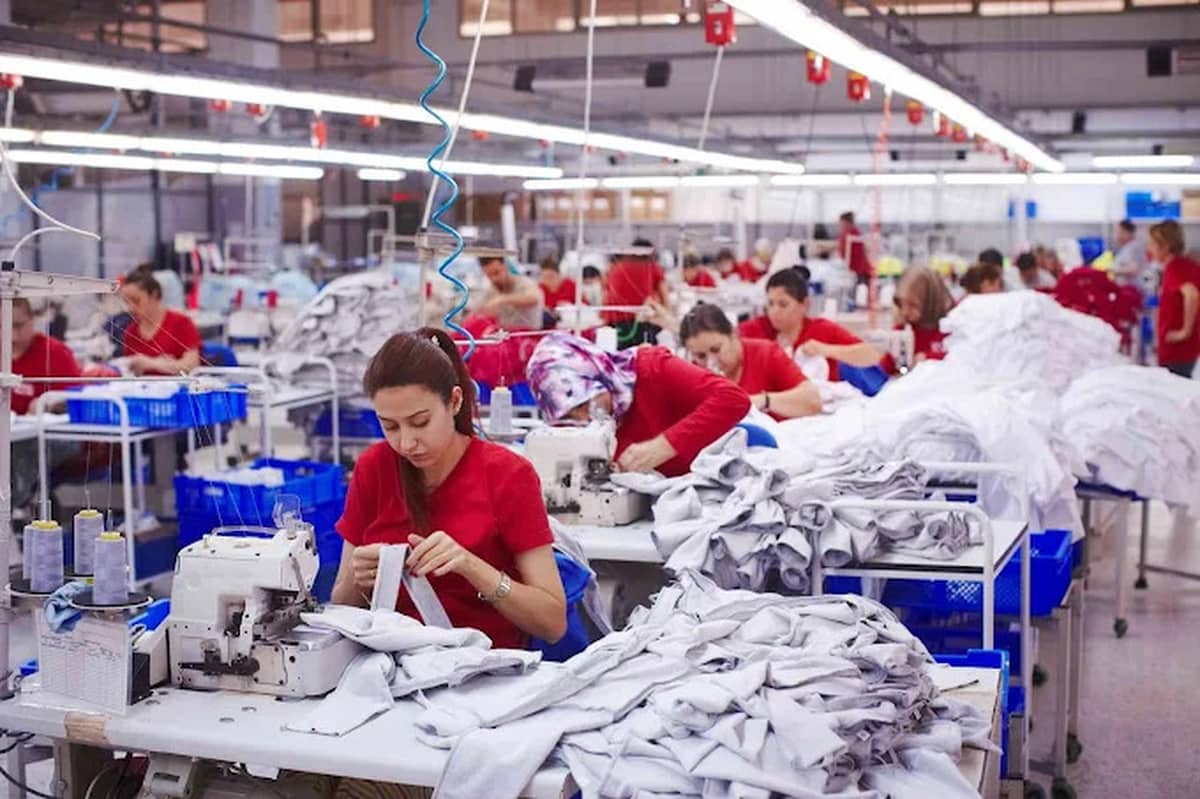
The Real Cost Difference � Overseas vs Local Manufacturing
Cost is the primary factor driving most brands toward overseas manufacturing. The price difference between local USA/UK production and overseas manufacturing in countries like Bangladesh is substantial�often 40-60% lower FOB prices. However, true cost comparison requires considering landed cost including shipping, duties, and logistics. For most orders above 500 pieces, overseas manufacturing remains significantly cheaper even with these additional costs.
Local manufacturing costs are driven by higher labor costs, stricter regulations, and smaller production scales. USA garment workers earn $15-20 per hour compared to $0.60-0.80 per hour in Bangladesh. This labor cost advantage translates directly to lower FOB prices. Additionally, overseas factories benefit from economies of scale�producing millions of garments annually compared to thousands for local factories�further reducing per-unit costs through optimized processes and bulk material sourcing.
| Product | Local USA FOB | Local UK FOB | Bangladesh FOB | Difference |
|---|---|---|---|---|
| Basic t-shirt | $8-12 | �7-10 ($9-13) | $3-5 | 60% savings |
| Hoodie | $18-25 | �16-22 ($20-28) | $7-10 | 60% savings |
| Activewear set | $25-35 | �22-30 ($28-38) | $10-14 | 60% savings |
| Polo shirt | $12-18 | �10-15 ($13-19) | $5-7 | 60% savings |
| Denim jacket | $35-50 | �30-42 ($38-53) | $14-20 | 60% savings |
Shipping costs add $0.50-2.00 per piece depending on volume and destination�sea freight for large orders, air freight for urgent shipments. Duties range from 0-32% depending on product category and trade agreements. Bangladesh currently enjoys duty-free access to EU markets under EBA (until November 2026), providing additional cost advantages for European brands. Even accounting for shipping and duties, overseas manufacturing typically delivers 30-50% total cost savings for orders of 500+ pieces.
Quality � Is Local Manufacturing Better?
The assumption that local manufacturing equals better quality is a common misconception. Quality depends on the factory, not the country. Local factories often specialise in small runs of 300 pieces or less, excelling at quick iterations and personalised service. Overseas factories in countries like Bangladesh produce billions of garments annually for the world's largest fashion brands�H&M, Zara, Gap, Levi's�demonstrating world-class quality capability at scale.
Bangladesh is the world's second-largest garment exporter, shipping $47 billion worth of clothing annually. This volume is not possible without consistent, high-quality production. Major global brands would not source from Bangladesh if quality were inferior. The country's factories have developed sophisticated quality control systems, skilled workforces, and technical expertise over 40 years of industry development. Quality is about factory selection, not geography.
| Quality Factor | Local | Overseas | Winner |
|---|---|---|---|
| Communication | Same language, same time zone | Language barriers, time zone differences | Local |
| Sample revision speed | Fast (3-5 days) | Slower (7-14 days) | Local |
| Consistency | Good for small batches | Excellent for large batches | Overseas |
| Specialised techniques | Limited by equipment | Wide range of capabilities | Overseas |
| Volume capabilities | Limited (typically under 1,000 pcs) | High (10,000+ pcs easily) | Overseas |
Local manufacturing advantages in quality stem from proximity�you can visit factories, oversee production personally, and communicate in real-time. This hands-on approach helps catch issues early and ensures alignment with your vision. However, this advantage diminishes as order volume increases. For large production runs, overseas factories with established quality control systems and third-party inspection capabilities deliver more consistent quality than local facilities stretched beyond their capacity.
The key is matching your quality expectations to the right manufacturing partner. If you need 100 pieces with frequent in-person oversight, local may be better. If you need 5,000 pieces with consistent quality across the batch, overseas factories with ISO 9001 certification and established QC processes deliver superior results. Quality is about capability and control, not location. SDF Clothing holds 13 international certifications ensuring consistent quality standards.
Lead Times � Overseas vs Local
Lead time is where local manufacturing has a clear advantage. The entire process from sampling to delivery typically takes 30-45 days with local production compared to 60-90 days for overseas manufacturing. This difference matters for brands with tight launch schedules, seasonal collections, or fast fashion business models. However, for planned production cycles with adequate lead time, the overseas timeline is manageable and often worth the cost savings.
| Stage | Local (USA/UK) | Overseas (Bangladesh) |
|---|---|---|
| Sample turnaround | 3-5 days | 7-14 days |
| Bulk production | 20-30 days | 40-45 days |
| Shipping | 1-3 days (domestic) | 20-45 days (sea freight) |
| Total timeline | 30-45 days | 60-90 days |
| Reorder speed | 15-25 days | 45-60 days |
The shipping component dominates the overseas timeline. Sea freight from Bangladesh to US West Coast takes 20-30 days, to Europe takes 30-40 days. Air freight reduces this to 5-7 days but costs $3-5 per piece versus $0.50-1.00 for sea freight. For urgent orders, air freight makes overseas manufacturing competitive on speed but eliminates most cost advantages. Smart brands plan production cycles around sea freight timelines to maximize cost savings.
Local manufacturing excels for rush orders and quick replenishment. If you need product in under 30 days or require frequent restocking with short notice, local production is often the only practical option. However, for planned seasonal collections or steady inventory replenishment, the longer overseas lead time is manageable. Many brands build 90-day production planning into their operations to take advantage of overseas cost savings.
Sample development is faster locally due to proximity and communication ease. Local factories can often turn around revisions in days rather than weeks. For brands in the design development phase or testing new concepts, local sampling followed by overseas bulk production is a common strategy�leveraging local speed for development and overseas efficiency for production.
"Made in USA/UK" � Is It Worth the Premium?
"Made in USA" or "Made in UK" labeling carries genuine marketing value for certain brands and consumer segments. This premium positioning appeals to consumers who value domestic manufacturing, ethical labor standards, reduced carbon footprint, or support for local economies. For brands targeting these values, the higher cost of local manufacturing can be justified through premium pricing�typically 20-40% higher than comparable overseas-produced goods.
Premium positioning works best for luxury, sustainable, or values-driven brands. A $50 t-shirt made in USA can compete with a $30 t-shirt made overseas if the brand story emphasizes ethical production, artisanal craftsmanship, or environmental responsibility. The premium pays for the manufacturing cost differential while maintaining healthy margins. However, this strategy requires strong brand storytelling and a target market willing to pay for values.
Volume limitation is a critical constraint of local manufacturing. Most local factories struggle with orders above 500 pieces due to smaller facilities and labor pools. This caps growth potential for successful brands. Scaling beyond local capacity requires either finding larger local facilities (rare and expensive) or transitioning to overseas manufacturing�a complex process once brand identity is established as local-made.
"Made in USA/UK" makes strategic sense for premium/luxury positioning, political/cultural branding (patriotic appeals), or very short-run fashion where speed and exclusivity matter. It's less suitable for price-competitive categories, high-volume basics, or brands targeting mass market segments. The decision should align with your brand identity, target market, and long-term growth strategy�not just manufacturing preference.
IP and Design Protection � Overseas Risk Reality
Intellectual property risk with overseas manufacturing is real but manageable with proper precautions. The concern that overseas factories will copy your designs is valid but often overstated. Reputable overseas manufacturers depend on long-term client relationships and have no incentive to steal designs�their business model is production, not brand building. However, the risk exists and requires mitigation through contracts, NDAs, and working with certified manufacturers.
Protect your designs with overseas factories through several measures. Use non-disclosure agreements (NDAs) before sharing detailed specifications. Limit information sharing during initial sampling�share full tech packs only after establishing trust. Work with certified manufacturers who are accountable to industry associations. In Bangladesh, BGMEA-member factories have accountability mechanisms and reputations to protect. SDF Clothing provides confidentiality agreements and secure handling of all client designs.
Local manufacturing essentially eliminates IP risk because you maintain physical proximity and legal jurisdiction. You can visit factories, monitor production, and pursue legal action locally if needed. This peace of mind has value for brands with highly innovative designs or proprietary technologies. However, for most fashion brands where designs evolve seasonally and IP protection is one factor among many, overseas IP risk is manageable and doesn't outweigh cost advantages.
Most established fashion brands manufacture overseas without significant IP issues. The key is partner selection. Working with established, certified manufacturers like SDF Clothing with track records serving international brands minimizes risk. These factories have built their businesses on trust and reliability�stealing designs would destroy their reputation and client base. The risk is highest with unverified, low-cost factories that lack established reputation and industry accountability.
Environmental Impact � Surprising Comparison
The environmental impact comparison between local and overseas manufacturing is counterintuitive. While local production reduces shipping distance, overseas manufacturing often has lower per-unit carbon footprint due to factory efficiency and sea freight economics. Air freight for local emergency orders has massive carbon cost�approximately 50 times higher than sea freight per kilogram. Planned overseas production via sea freight can be more environmentally efficient than rushed local production via air freight.
Bangladesh LEED-certified factories are among the world's most energy-efficient garment production facilities. These factories use solar power, water recycling, and waste reduction systems that exceed many local factory capabilities. The concentration of production in large, efficient facilities creates economies of scale in energy use that distributed local production cannot match. Local small factories often lack capital for advanced environmental systems, resulting in higher per-unit energy consumption.
Sea freight from Bangladesh to USA or Europe has surprisingly low carbon intensity per garment. Large container ships move thousands of garments simultaneously, making the per-unit carbon footprint minimal. A study by the Danish Fashion Institute found that shipping a t-shirt from Bangladesh to Denmark has lower carbon emissions than trucking it from Italy to Denmark. The mode of transport matters more than distance�sea freight is efficient, air freight is not.
Carbon calculation per garment is not straightforward. Local production has advantages in reduced transportation distance but disadvantages in smaller-scale factory efficiency. Overseas production has disadvantages in shipping distance but advantages in factory scale and efficiency. The most sustainable choice depends on specific circumstances: order volume, transportation mode, factory certifications, and material sourcing. SDF Clothing offers GOTS-certified organic options and LEED-certified facilities for brands prioritising sustainability.
When Overseas Manufacturing Is the Right Choice
The decision between overseas and local manufacturing depends on your specific situation. There's no universal right answer�the optimal choice varies by brand stage, product type, target market, and business model. Use this decision matrix to evaluate which approach aligns with your priorities and constraints.
| Your Situation | Overseas Makes Sense | Local Makes Sense |
|---|---|---|
| Budget priority | Maximising margin, price-competitive market | Premium positioning, higher price points |
| Volume needed | 500+ pieces per style regularly | Under 500 pieces per style |
| Speed to market | Planned seasonal cycles, 90-day lead time acceptable | Rush orders, under 30-day turnaround needed |
| Brand positioning | Value, fashion-forward, trend-focused | Premium, sustainable, local-made narrative |
| IP concerns | Standard fashion designs, manageable risk | Highly proprietary designs, zero risk tolerance |
| Flexibility | Stable production schedule, predictable demand | Frequent design changes, test-and-iterate approach |
Overseas manufacturing is the right choice when budget is a priority, you need volume beyond local capacity, you have adequate lead time for planned production, your brand competes on value rather than local-made premium, your IP risk is manageable through proper precautions, and your demand is stable enough to support longer lead times. This describes most growing fashion brands beyond the initial startup phase.
Local manufacturing makes sense when you're testing new designs with small quantities, you need rapid turnaround for market testing, your brand positioning explicitly values local production, your target market pays premium for domestic-made goods, your designs are highly innovative requiring maximum IP protection, or you need maximum flexibility for frequent changes. This describes early-stage brands, premium sustainable brands, and brands serving niche local-made markets.
Many brands use a hybrid approach: local sampling and small production runs for development and testing, transitioning to overseas manufacturing for confirmed designs at scale. This leverages local speed and proximity during development while capturing overseas cost advantages for volume production. SDF Clothing supports this hybrid model with low MOQs and flexible production scaling.
Overseas vs Local Clothing Manufacturer FAQ
Is overseas clothing manufacturing cheaper than local?
Yes, overseas manufacturing is typically 40-60% cheaper than local USA/UK manufacturing. A basic t-shirt that costs $8-12 FOB from the USA costs $3-5 FOB from Bangladesh. However, total landed cost including shipping, duties, and logistics must be calculated. For large orders, overseas remains significantly cheaper even with these additional costs. The cost advantage is most pronounced for orders above 500 pieces where shipping and duty costs are spread across more units.
Is the quality better with local clothing manufacturers?
Quality is not inherently better with local manufacturing�it depends on the factory, not the country. Local factories excel at small runs and quick iterations. Overseas factories like those in Bangladesh produce billions of garments annually for major brands like H&M, Zara, and Levi's, demonstrating world-class quality capability. The key is factory selection and quality control, not geography. SDF Clothing holds 13 international certifications ensuring consistent quality standards.
How long does overseas clothing manufacturing take?
Overseas manufacturing typically takes 60-90 days total including production (40-45 days) and shipping (20-45 days). Local manufacturing takes 30-45 days total including production (20-30 days) and minimal shipping. The time difference matters for time-sensitive launches but less for planned production cycles. Air freight can reduce overseas shipping to 5-7 days but adds significant cost, eliminating most price advantages.
Is "made in USA" worth the extra cost for a clothing brand?
"Made in USA" can be worth the premium if your brand positioning targets consumers who value domestic production, ethical labor standards, or reduced carbon footprint. Premium positioning can support 20-40% higher prices. However, local manufacturing limits volume and increases costs significantly. The decision depends on your target market and margin structure. For price-competitive brands or high-volume production, the premium often isn't sustainable.
What are the risks of overseas clothing manufacturing?
Overseas manufacturing risks include longer lead times, communication challenges across time zones, IP protection concerns, quality control distance, shipping delays, customs complexity, and political/economic instability in some regions. These risks are manageable through proper due diligence, contracts, third-party inspection, and working with established manufacturers in stable countries like Bangladesh. SDF Clothing mitigates these risks through certifications, transparent communication, and established processes.
Can I get fast turnaround from overseas manufacturers?
Fast turnaround is possible from overseas manufacturers but at higher cost. Air freight reduces shipping time from 30-45 days to 5-7 days but adds significantly to cost. Some overseas factories offer rush production for 20-30% premium. However, for true speed (under 30 days total), local manufacturing is generally more practical and cost-effective. The best approach is planning production cycles around overseas lead times to maximize cost savings.
How do I protect my designs with an overseas factory?
Protect designs with overseas factories through NDAs, clear contracts, limited information sharing during sampling, working with reputable certified manufacturers (BGMEA members in Bangladesh), and registering trademarks in relevant jurisdictions. SDF Clothing provides confidentiality agreements and secure handling of client designs. IP risk is real but manageable with proper precautions. Most established brands manufacture overseas without significant IP issues.
Which countries offer the best overseas manufacturing?
Bangladesh offers the best cost-quality balance for knitwear and woven garments. Vietnam excels in technical apparel and has strong infrastructure. China offers the fastest production and widest capability but at higher cost. India provides strong cotton and artisanal capabilities. The best choice depends on your product type, volume, and target markets. SDF Clothing in Bangladesh specialises in knitted garments with 300 piece MOQs and 13 international certifications.
Ready to Choose the Right Manufacturing Strategy?
SDF Clothing has helped 500+ brands evaluate and execute their manufacturing strategy since 1998. Whether you're exploring overseas manufacturing for the first time or scaling established production, we provide transparent pricing, certified quality, and the expertise to help you make the right decision for your brand.
Get a free FOB quote within 48 hours. We'll provide detailed pricing, lead times, and honest guidance on whether overseas manufacturing fits your situation. Compare our quote to local options and see the savings yourself.
Last updated: May 2026 � Average response time: 24 hours
Related: clothing manufacturer Bangladesh, clothing manufacturer USA, clothing manufacturer UK, clothing manufacturing cost guide, OEM clothing manufacturer, Bangladesh vs China clothing manufacturing, quality inspection service, confidentiality agreements, certifications, sourcing agent service, contact, sample request.